It has been five years since we installed a composting AirHead toilet onboard Kate and the other day, while giving the unit it’s monthly deep clean, I thought it might be handy to tell you what we like, what we’ve learned, and what we’ve improved.
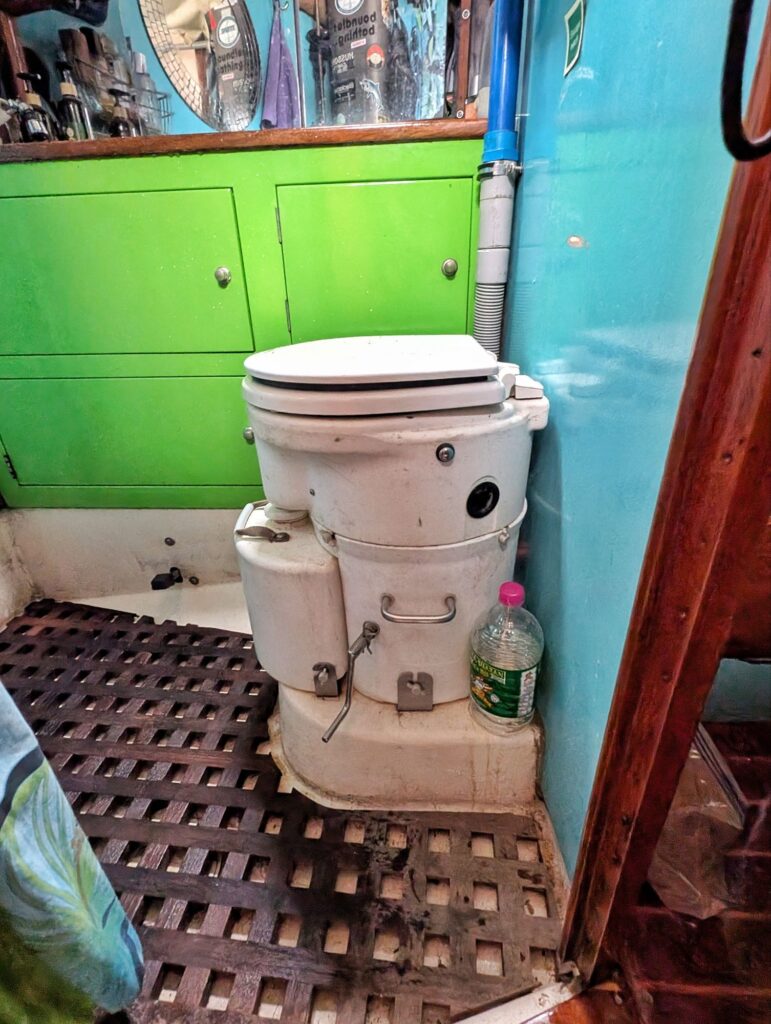
(I wrote about how a composting toilet works, and how easy the installation of the AirHead was, for Cruising World in 2020. So, if you’re interested in the basic nuts and bolts of a composting head system you can read that article HERE.)
Firstly, a composting toilet may have saved my life.
Ok, this is a little dramatic but I don’t say this in jest. We installed our AirHead toilet while we were in the yard in the Philippines, weeks before the covid 19 pandemic shut down the world. I was alone onboard when borders shut and the boatyard, which perhaps would be better described as a parking lot, didn’t offer yachties much in the way of facilities ashore. What I, the lone resident of the parking lot, was offered for a bathroom was a room with a toilet bowl cemented into the floor sans seat or tank, and a tap on the wall that ran into a bucket which could be used to flush said toilet. The problem was there was often no water.
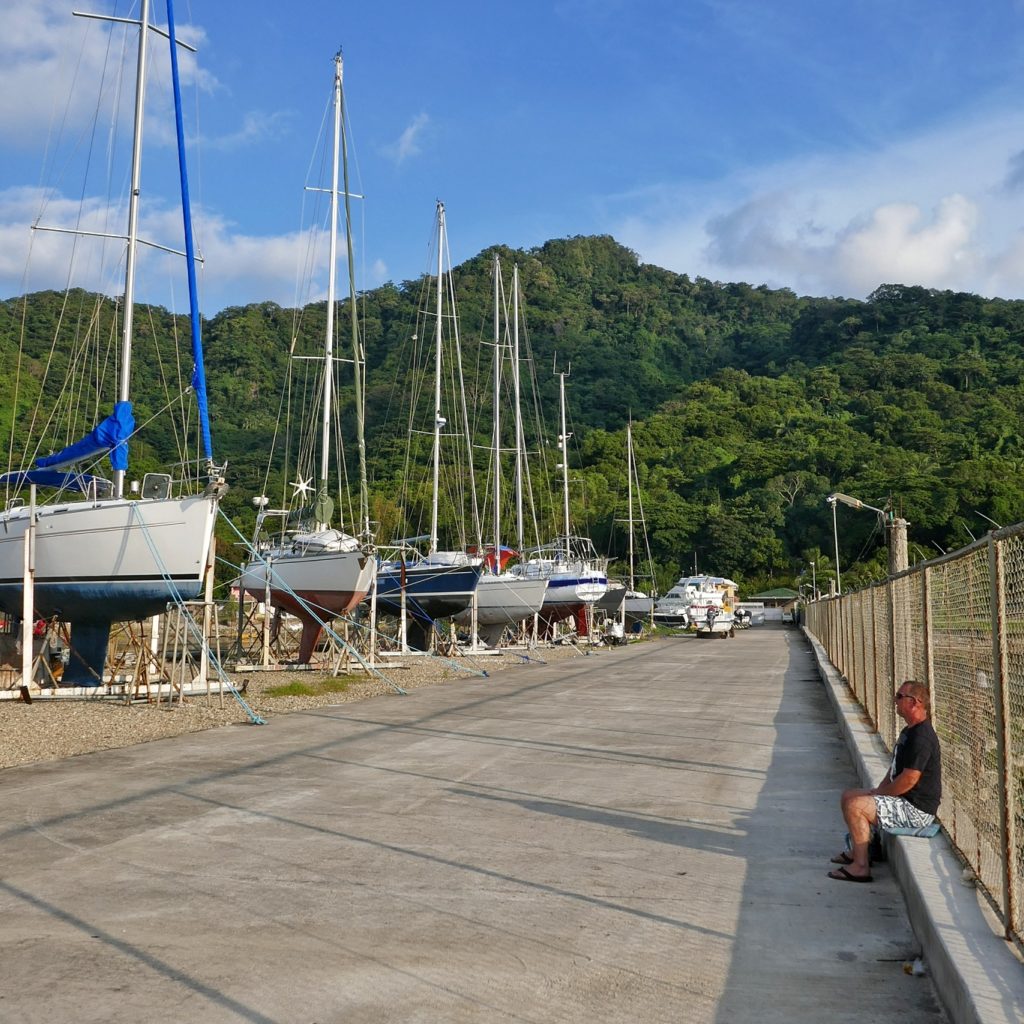
During storms the water would be cut off to prevent damage to electric pumps etc. It would also be cut off on random Saturday evenings and one would have to wait until Monday work hours until it would resume. During dry weeks in the summers the water source would run dry. During power outages there was no water. Any holidays when the office was closed there was usually, mysteriously, no water. You can see the pattern here and I doubt I need to describe the state I found the toilet in after several of the yard workers started sneaking in to use it, water to flush or not.
For two years I lived alone trying to deal with the unknowns of the pandemic, and I was SO grateful that the simple act of using the toilet wasn’t something I had to worry about. The AirHead meant I had a clean, private toilet to use, at 3am or any other time I needed it. Not only could I avoid the health hazard of a bathroom ashore, but it meant there was one less thing to stress about. During a time where even walking through the village to go buy fresh veggies was a scary endeavor, having a safe place to pee meant a lot to my mental health.
Of course, this also means that any other yard periods are greatly improved as well. No more having to put on clothes and stumble across the yard in the rain in the middle of the night just to use the bathroom. And, it also means that you can use the onboard toilet while in a busy anchorage or at a marina without having to worry about filling the black tank or arranging pumps outs. So, if you enjoy the comfort of using your own head, day or night, in the water, on the hard, in a crowded anchorage, or alongside then a composting toilet might be right for you.
Secondly, vinegar and ventilation make a big difference.
One of the not so nice aspects of the composting toilet is the pee tank. It can be a little stinky, especially when you drink a lot of coffee or sail in the tropics. After all, it can sit idle for a day or two (depending on your volume of pee-age).
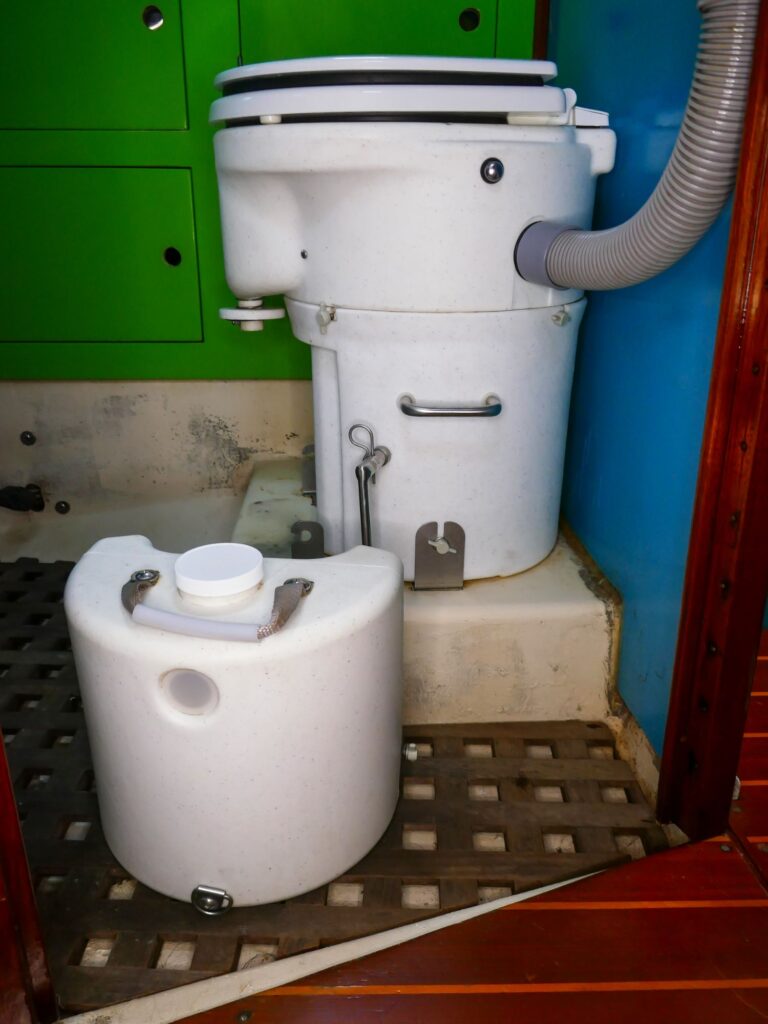
I experimented for months before I stumbled upon the solution of how to lessen the smell of stale urine. I tried adding some sugar but didn’t find it really did much. I was religious about rinsing it thoroughly after I emptied it, sometimes letting it soak for a couple hours full of clean water hoping to draw out some of the smell. I cleaned it inside and out ever couple weeks, even using some small stones or dried beans inside the tank for agitation. Nothing seemed to help.
Turns out plain old white vinegar does the trick.
Simply adding a splash of white vinegar, about ¼ cup or so, to the pee tank eliminates the pungent aroma of several liters urine. Better yet, it greatly reduces the scale that can build up inside the pee tank over time. The fact that most boaters buy white vinegar in bulk for cleaning salt residue, brightening laundry, removing rust, and if you’re like me pickling everything before it spoils, means that there is always some laying around.
We also learned that sufficient ventilation in the solids tanks really does affect how things break down.
This seems pretty obvious and is why the AirHead comes with a 12V fan, length of hose, and cowl that is meant to address this issue. However, we found that what is considered good ventilation by the manufacturers was not sufficient when the system is installed in a moist, tropical, sea air environment. I will concede that when we installed the composting toilet we chose to make the hose run a little long in order to avoid an ugly hose snaking across the low ceiling in the head. However, I still don’t think the small fan mounted in the cowl supplied was strong enough to offset the humidity in the environment on rainy days. Which, lets face it, when you are anchored off a rain forest island like Borneo are fairly frequent.
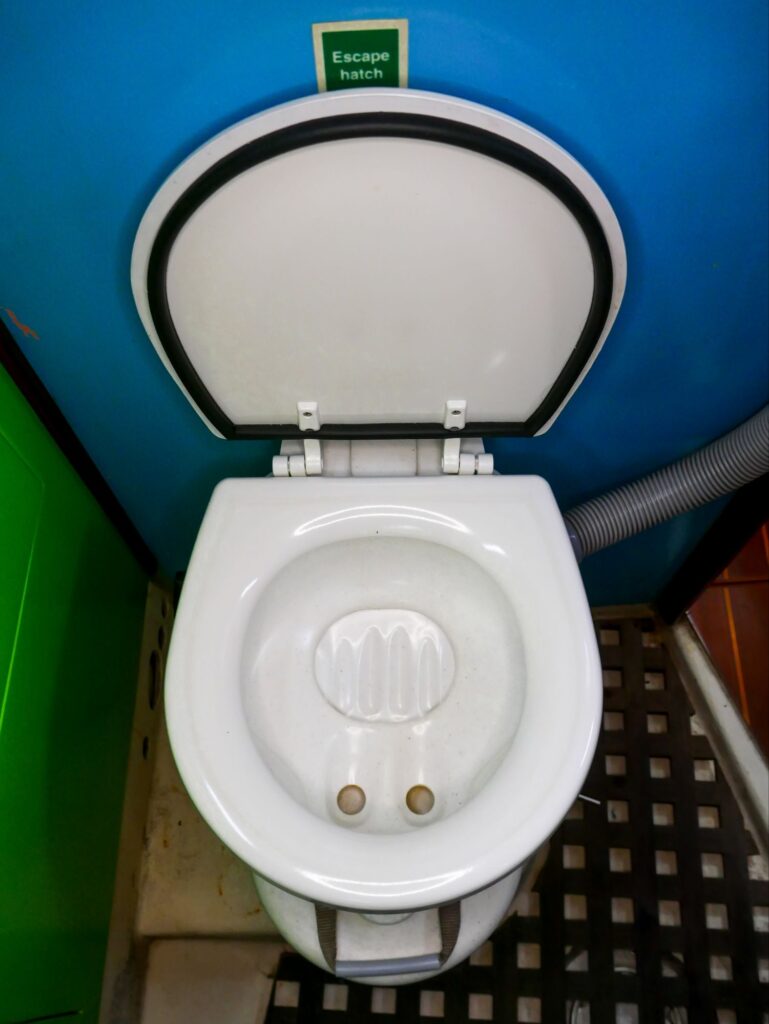
For months we had issues with the solids tank not decomposing as much as it should. It was often swampy, a descriptor one wants to avoid when talking about compost of any kind but especially composting toilets. I tried adding more dry coco coir to balance it out, it didn’t help. I tried less hydration of the coco coir from the get go, that didn’t help. I tried stirring it more often hoping to bring more of the moist compost to the top to dry, that didn’t help. We emptied it more frequently, that didn’t help.
Finally, Steve installed a stronger, in-line blower-style fan and a variable speed switch.
We noticed a difference in the solids tank right away. The stronger fan was able to pull more moisture out of the tank and that meant better and quicker composting. Even after days of heavy rain and a couple weeks of use, the solid tank went from making muddy wet sounds to sounding dry and pebbly when stirred. The variable speed switch allows us to crank up the fan if we have several days of wet weather, and dial it back when we get hot, dry days. Yes, the fan is a little noisier than the one provided by AirHead, however I’ll take a little background noise over a swampy toilet any day of the week.
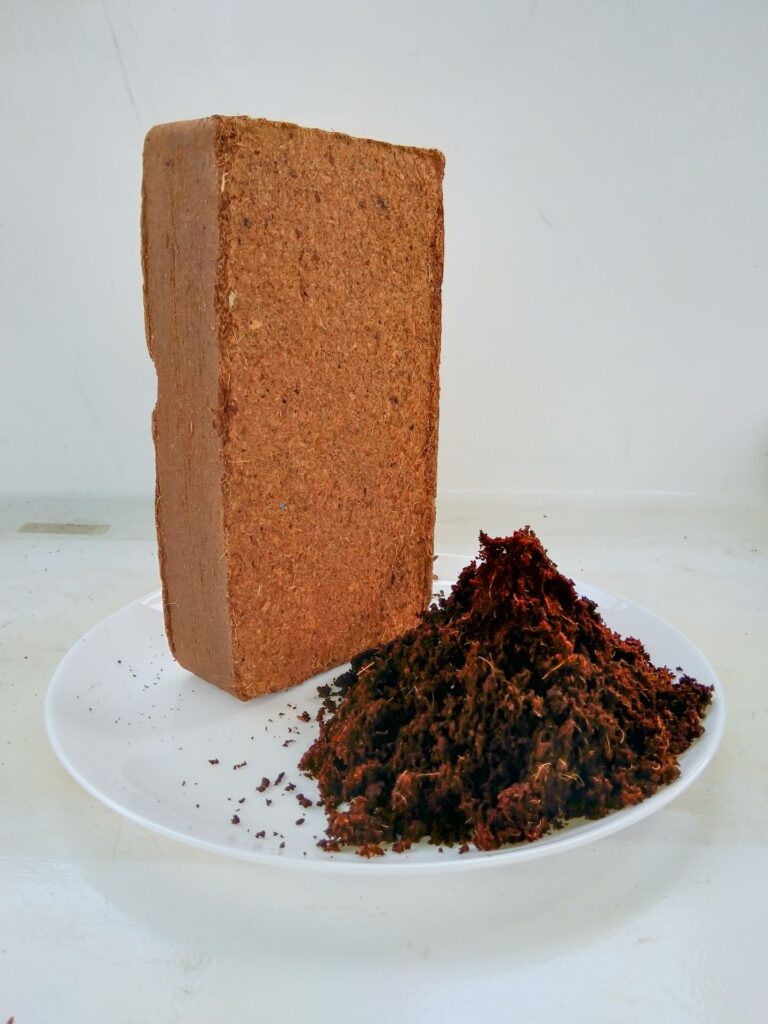
Thirdly, not all coco coir is created equal.
Our AirHead toilet uses coco coir as the substrate for composting the solids. This is easy enough to find, even in the Philippines and Malaysia I had no problem ordering from local online shopping platforms. However, I quickly learned that the quality of coco coir can vary greatly from soft and fluffy when hydrated, to dusty and difficult to get to absorb any moisture at all. And that dusty coco coir will get you right back to those swampy conditions, even if you think you’re being smart and mixing it half and half with the good stuff cuz that’s all you have left onboard. Take it from me, leave the crappy quality coir for potting plants.
Due to storage constraints onboard, I buy coco coir bricks, which are highly compressed during drying and them vacuum packed. Even still I am careful to also store them in plastic ziplock bags. Coco coir in gardening and pet stores that specialize in reptiles is often better quality. The pet stores will sometimes have coco that has been sterilized, which also means no chance of any fly larva rehydrating in your toilet. I have had a fly infestation before, but it was moisture related so I wouldn’t worry too much about dormant bugs in dried coir. If you are you can freeze the coco for 24hrs if that’s available.
After 5 years are we still happy with our choice of installing a composting toilet?
There is definitely a learning curve and perhaps some design elements that could be improved (they have already redesigned the toilet bowl but we think the agitation rod could be upgraded too) but the pros still wipe out the occasional cons when you consider everyday use. Would we install one in another boat, or camper, or at a cottage or other off-grid building? For sure.
Love,
H&S

Thanks for sharing, Heather. We would love to install composting toilets on our boat but we have yet to find a footprint that would fit. They just make so much sense compared to the joys of blocked maserators, pipes and holding tanks. Whoever thought it was a great idea to put a toilet system designed for land living on a boat should be shot!
Thanks Bruce! The AirHead fit exactly where our Jabsco was, albeit a bit higher, hence the foot stool. Don’t miss the seawater funk and the blockages and it defs opened us up to being marina compliant. Not a cheap endeavour but it has certainly paid off.
We have a composting toilet from Air Head and agree 100% with your assessment. You have to be comfortable with your own waste. But the convenience of using it while on the hard and never having to worry about pump outs is well worth the cons as you say. Love the article and would love to know what fan and speed control you found to use. Thanks!
Thanks for saying hello Ronald. We used a PWM, Meimotor was the brand, same that we put on our Caframo fans in the cabin actually. The in-line blower type fan was just a random find Shoppee (Asian Amazon) that is in its own housing meant to fit into hose, diameter to suit the grey hose AirHead supplies. Send an email if you’d like a photo, yachtkate@gmail.com, I can’t post one here.