I was fortunate enough to grow up eating homemade bread.
Every few months my Dad would arrive home from town with a 100 pound bag of flour. He would heave it out of the back of his Volvo station wagon and appear in the doorway of the kitchen with it resting on his shoulder, like it was no effort at all. After carefully lowering it into the large wooden barrel that lived in the pantry along side the portable washing machine and the electric stove, he would cut open the bag then cover the barrel with a large stainless steel mixing bowl that was big enough I could have used it as a boat or a winter sled.
Every week my Mother would bake 6-8 loaves of bread, mixing it by hand with a wooden spoon before kneading on the countertop for at least 10 minutes. An hour later, when she was shaping the loaves, the “thwack” of each flattened ball of dough hitting the counter would reverberate through the whole house. Her weekly batch of bread was enough to feed the six of us – Mom, Dad and us four kids. Enough for toast in the morning, and sandwiches in our school lunch boxes, and to have on the table at supper. There was never not homemade bread in the house.
As a result I have never much cared for store bought bread – Ben’s Cinnamon Raisin bread in the purple bag that we would get as a “treat” a few times a year, the exception. I would much rather do without than eat the likes of Wonderbread or any other such blindly white, highly processed, gummy loaf that they label as bread in the grocery store. This means that since I moved out on my own in college I have been making bread myself, albeit not as regularly as my Mother.
I have written about baking bread onboard several times.
I published an article about stove top bread baking years ago in Cruising Helmsman, and had an onion focaccia recipe appear in Cruising World. I have played with sourdough starters (RIP Big Momma. She perished in a fridge in Fiji during a 2 week long power outage after a cyclone), and long ferments, and high hydration doughs. I’ve baked bread on a camp fire, and in a solar oven, and steamed under pressure in a pressure cooker. I even taught a bread making workshop in the Solomon Islands where we were baking the loaves in a 44-gallon barrel filled with hot river rocks, lidded with a piece of roofing tin covered in glowing embers of burned coconut husks.
But some days its just too hot to turn the oven on or keep an eye on a cast iron pot on the stove top for half an hour. Or maybe I am just lazy, or busy. Or maybe, like tonight’s supper of Curried Pumpkin, the meals demand something to sop things up with, just not bread of the sliced variety. On days like this I turn to a trusty recipe I first saw on a Jamie Oliver YouTube during COVID when everyone was “making due.” Yogurt Flatbread.
Who doesn’t love a fool proof, no-recipe, recipe?
The great thing about this recipe is that it is hardly a recipe at all.Two parts all purpose flour, one part yogurt, a pinch of salt and a teaspoon or two of baking powder. And if you live in a country where self-raising flour is sold, then it’s even simpler because you can omit the baking powder. That’s all.
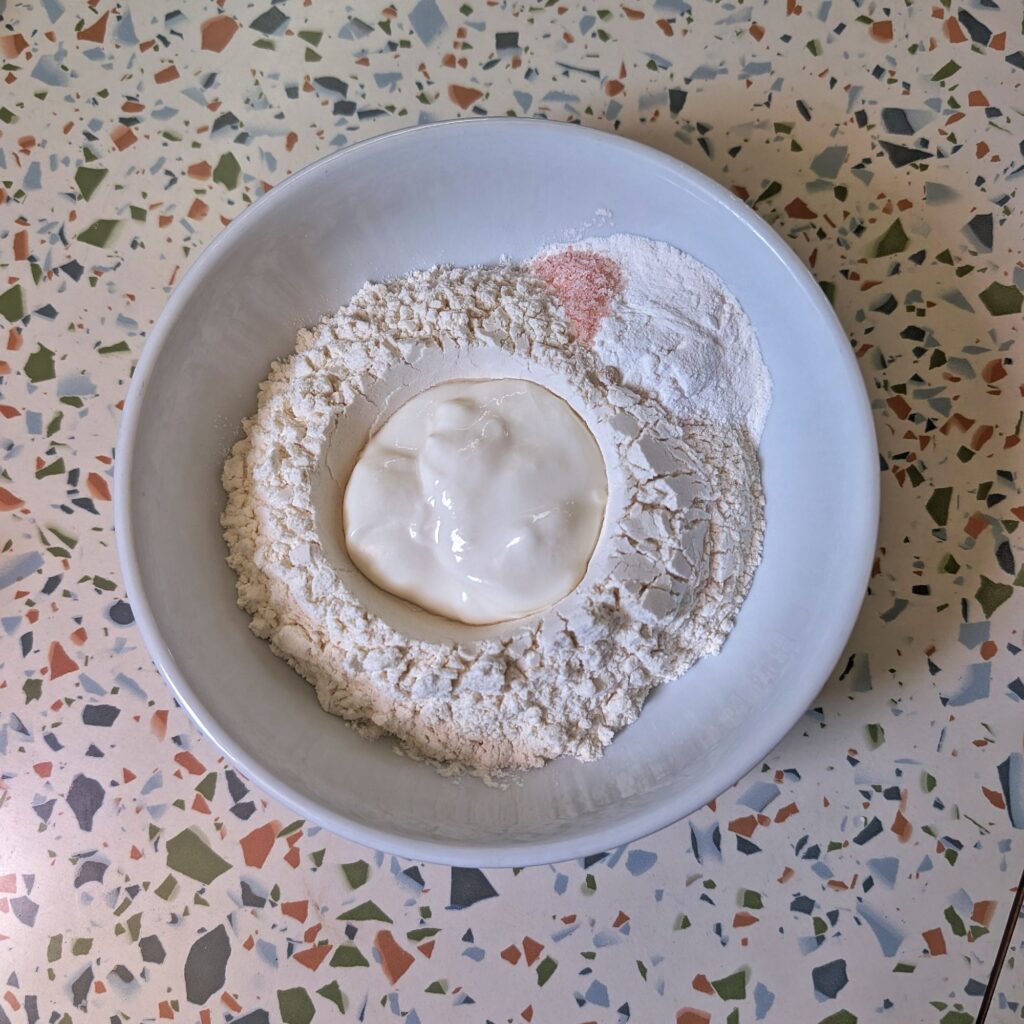
I like to put the flour, baking powder, and salt in a bowl then make an indent with a measuring cup to fill with yogurt. (Hello, less dishes!) Since I make my own yogurt the consistency can vary from runny to very firm, depending on the brand of milk I can find. The ratios for this recipe work best with a typical, medium firm yogurt, as you’d find in a grocery store. When my yogurt is really firm, as it is this week, I will add a little less yogurt and some additional liquid- water or a splash of beer if you happen to be having one while making supper.
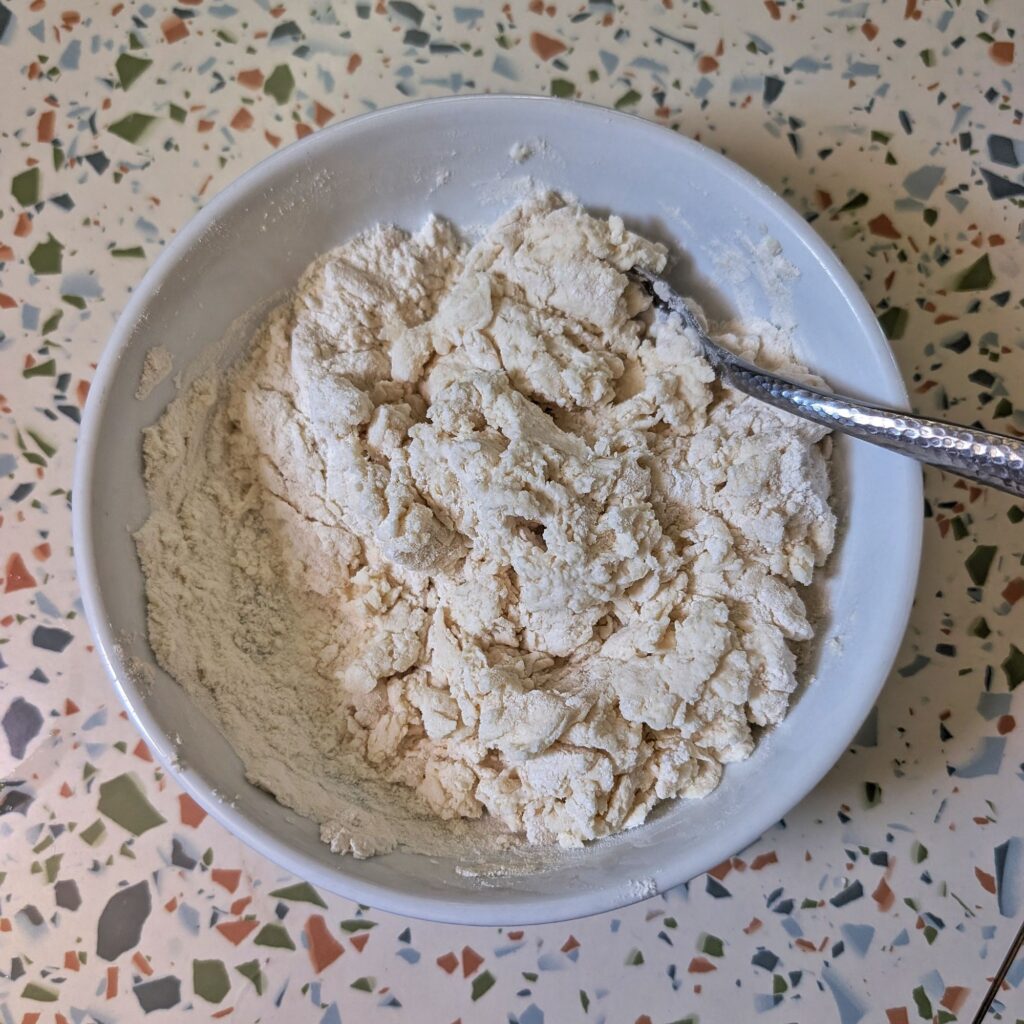

Stir the mixture together until it looks shaggy, then switch to your hands, gently squeezing and turning until the texture is uniform and the bowl is clean. You don’t want to knead it here, just bring it together. If you have added too much liquid you can sprinkle on some extra flour or if it is really tight, loosen it with some milk. Believe me, this is a very forgiving dough if you don’t handle it too, too much.
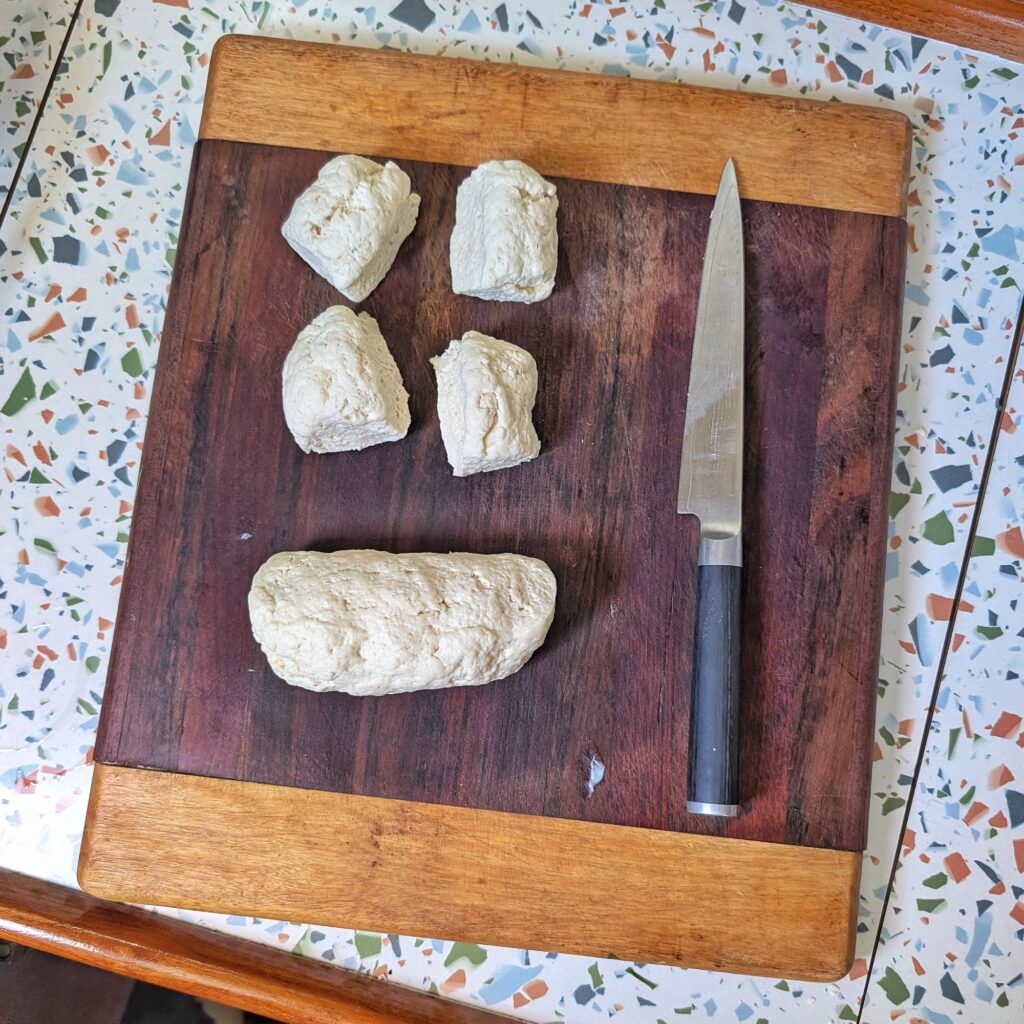
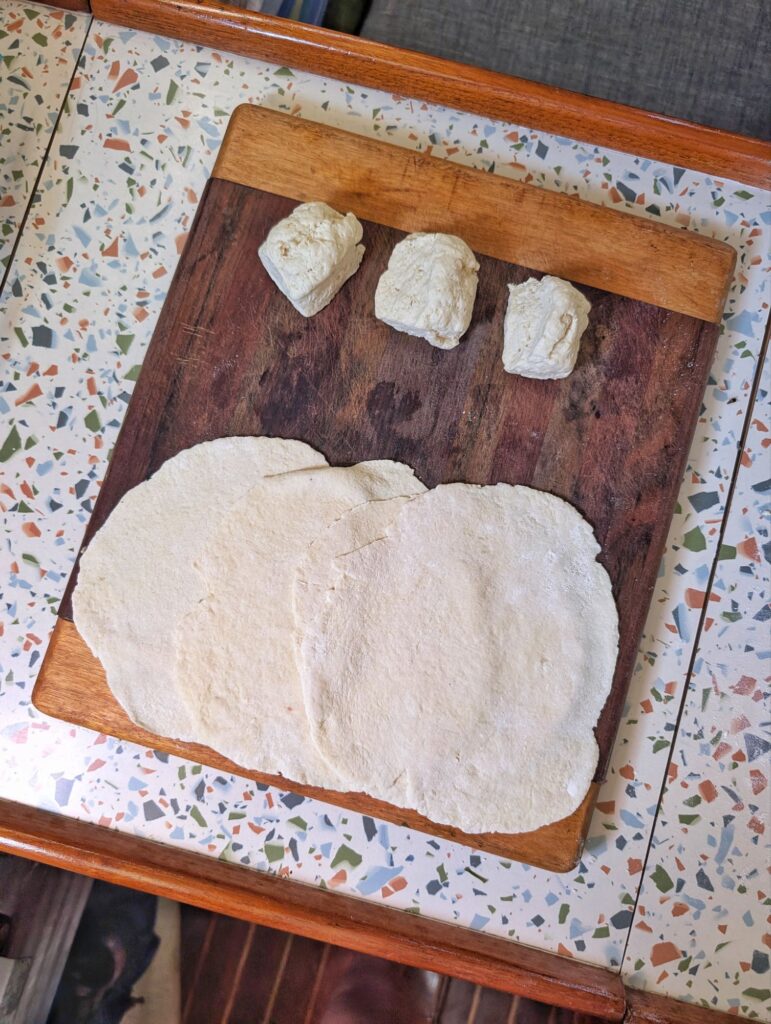
At this stage, I like to let to dough rest for a few minutes, just so it will relax. This gives me time to dig out my rolling pin, clear off the counter, put a pan on the heat. While the pan heats up (mine always takes a few minutes as it is cast iron) I divide the dough into even balls and roll or press to the desired thickness, flouring when necessary. I prefer to get a stack ready to cook so that I am not trying to roll and cook/flip at the same time. This usually means I get less burnt spots.
To cook the flatbreads place them in a HOT pan one at a time.
If you’ve gone the tortilla route then within 30 seconds or so small bubbles will appear and the dough will change from white to slightly opaque. Flip it and about a minute later a toasty aroma should waft from the pan. Flip it the third time and cook for another 1-2 minutes, and if you’re lucky the bread should puff up as the two sides separate via the trapped steam. When this doesn’t happen it will still be tasty, so don’t worry. If you’ve made your flatbreads a little thicker, than you’ll have to cook them a little longer before each flip, perhaps turning down the heat slightly so they cook through before burning.
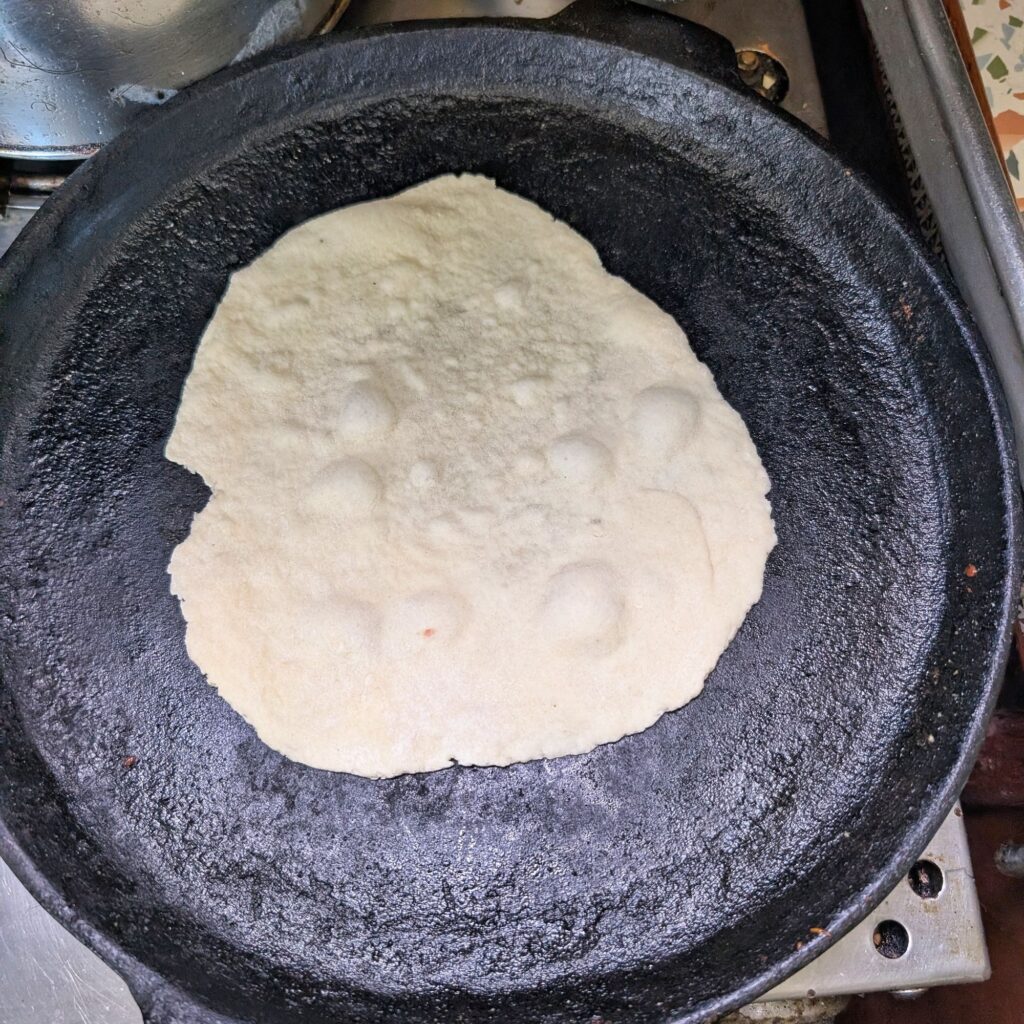
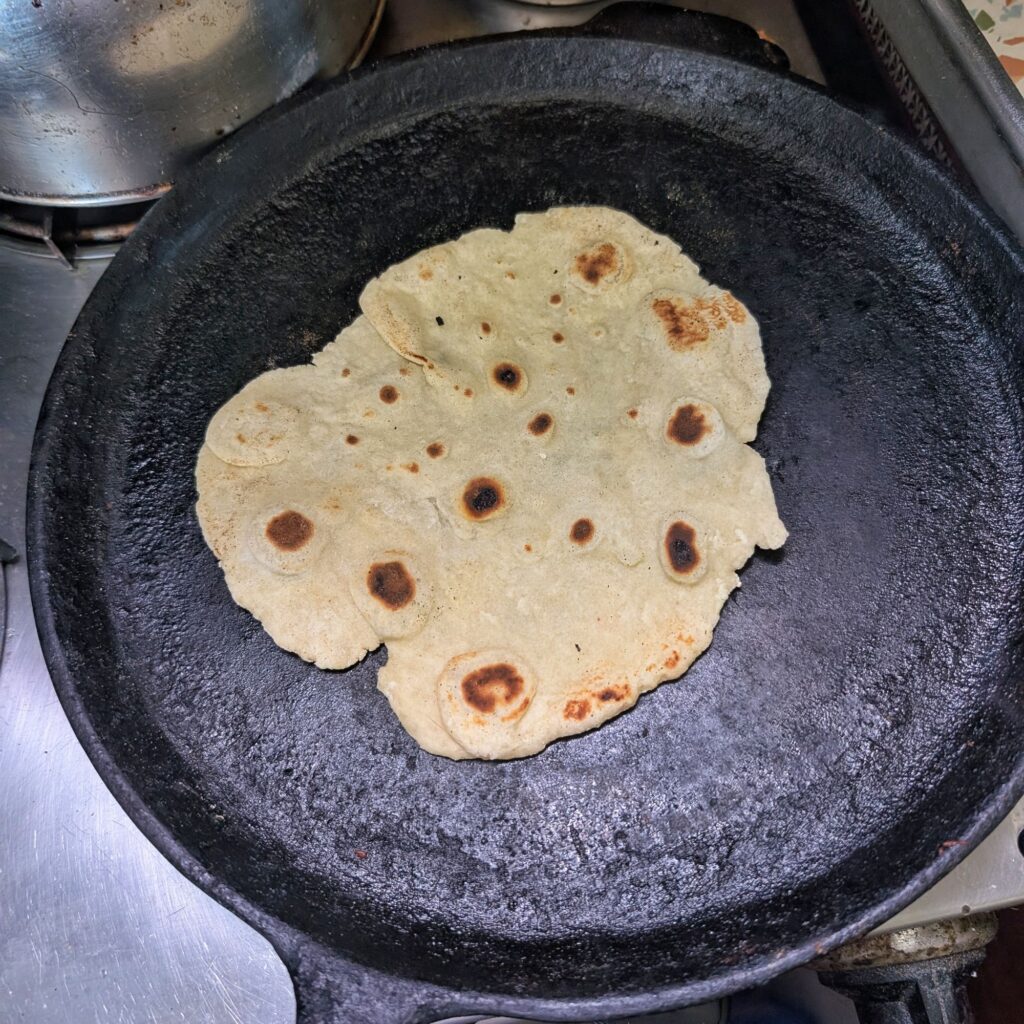
Place the flatbreads on a clean plate and cover with a dish towel to trap the steam. This makes the crispy bread pliable for eating. If you happen to have leftovers they will stay pliable for a day on the counter in a plastic ziplock, otherwise you’ll be enjoying flatbread crackers, which can be delightful as well.
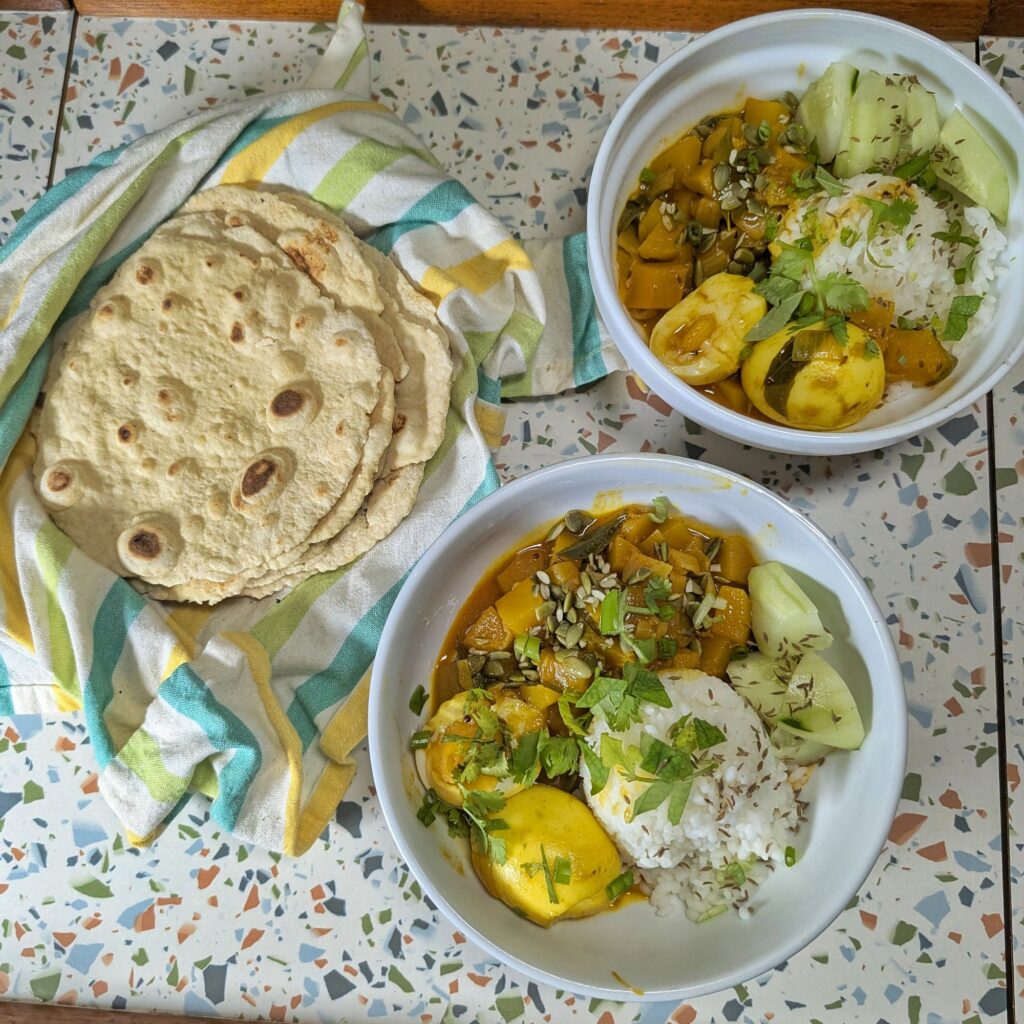
Whether you are cooking for two or twenty, this recipe will work. Every time.
You can portion the dough into little balls and roll them out thinly like a tortillas, as I did here. To make 8 hand-sized thin portions I used 1 cup flour, ½ cup yogurt, 1 tsp baking powder, and a pinch of salt.
However, this has also been my go to pizza dough recipe for the past few years as well. For two standard pizza pans I make a dough using 2 – 2 ½ cups of flour, 1 generous cup of yogurt, 2 tsp baking powder, and a slightly bigger pinch of salt.
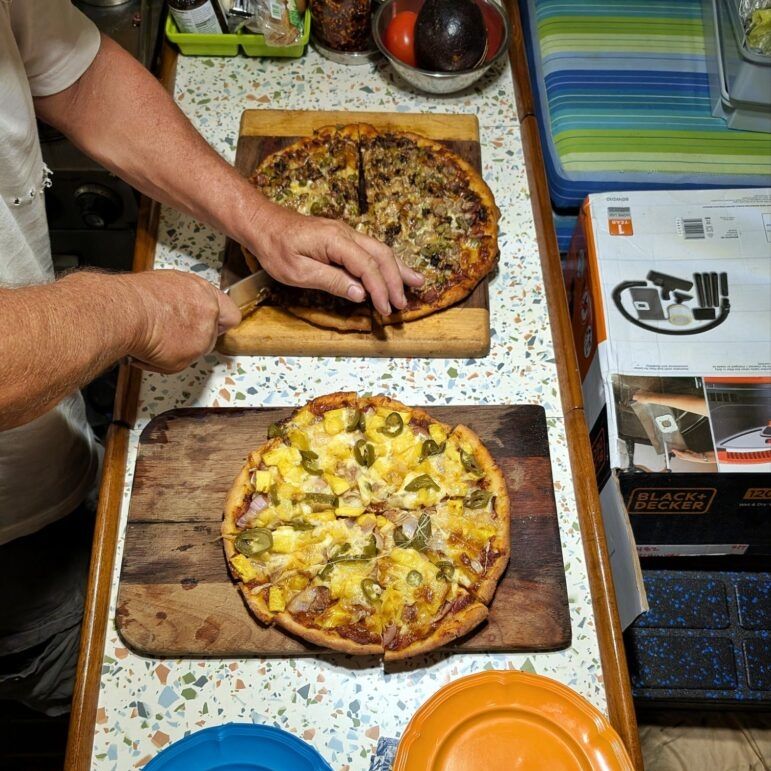
I do recommend trying to form the pizza dough by rolling it lightly and pushing it to the edges of your pan with your fingers, otherwise it can become dense if rolled too much.
I haven’t tried this with GF flour, but since the leveling agent is baking powder I think it would work. Any GF bakers out there who try it, please let me know.
Yogurt Flatbread has been a way that I have been making bread for the past couple years when I haven’t planned well or its just too hot to turn on the oven. I hope you enjoy it too!
Love,
H&S
