I have been thinking about Mexico a lot this week. How much we enjoyed our time there. How good the food was! What it would be like to return. As such I thought I would post a bonus Flash Back Friday story about wandering around eating taco, learning to make tortillas, and me beginning to find my confidence onboard. I hope you enjoy the story!
Love,
H&S
TORTILLAS/TRY
Mexico 2009
The taco truck, tucked underneath a streetlight and surrounded by jovial locals, advertises tacos al pastor, which means cooked like “a shepherd.” My mouth waters in hopeful response as the smells lasso my tongue. I can almost taste the sweet, charred pineapple and pork fat dripping down the pile of meat that is slowly turning on the unseen spit. The scent of roasted corn, something between burnt toast and caramelized sugar, lingers on the humid evening breeze. It is an aroma that perfumes the air everywhere we go in Mexico. Steve and I have been exploring Puerto Vallarta all day, which has mostly involved hopping from one street stall to another, eating everything that is new and unfamiliar. It is impossible that either of us is still hungry but without speaking, Steve and I both turn and walk toward the pool of light.
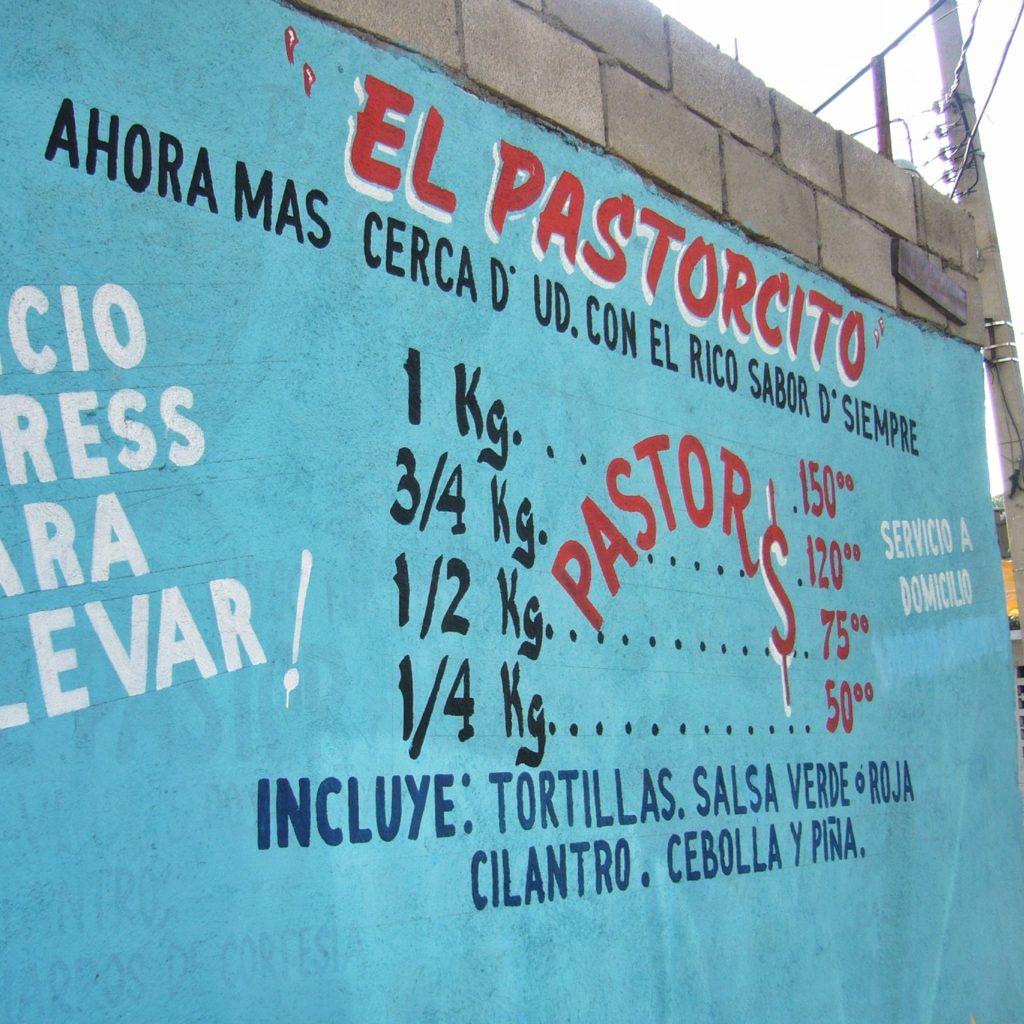
Nearing the truck, we step into line, and I slip into a trance, watching the women at the counter above me making tortillas.
She pinches off a piece of dough from a large mound, weighing and measuring it as she rolls it around in her palms, adding or subtracting instinctively, quickly, until she has a perfectly round ball of masa. With one swift, hard crunch she flattens the ball in a wooden tortilla press and peels the almost translucent six-inch round of dough off the press. She gently tosses the raw tortilla onto the large, shallow comal that is waiting over the flame of her portable propane burner, before reaching into the bowl for another piece of masa.
As she works the second ball, she also cooks the first tortilla, moving the disc around the heat of the comal, flipping it three times, until it transforms from a pale piece of dough into a golden puff, dotted with brown spots. I notice how she floats her hand over the comal to judge its heat and the faint smell of popcorn that tickles my nose just before she turns each tortilla. The process is non-stop; masa shaped into a ball, squashed in the press, cooked to perfection, and tossed into a pile for the next lady in line to pick up and fulfill an order.
The tortilla lady’s hands are strong but elegant, a blur as she works, non-stop over the hot pan. I want to ask if I can come behind the counter if I can help. I want to tell her I would work all night for free if she would just teach me her secrets about making tortillas. I want to, but I don’t, I am too shy to impose.
I don’t notice Steve moving further away from me or when the people behind me bunch together in line.
I am simply mesmerised, as I am every time, I watch a woman making tortillas on the roadside. The rhythm, the motion, the squeak of the press, call to me like a siren’s song, enchanting me. Steve gently grabs my shirt sleeve, “Helloooo, you in there?” he says as he pulls me along the queue. I turn to the customers behind me and flashed my “oops, I’m sorry” smile. The locals smile and nod like I am a child who has stopped a little too long and inconvenienced the adults but is, of course, forgiven.
It is a scene that has been on replay a lot recently.
Steve and I finally approach the counter and order three tacos al pastor each. They come unadorned and we dress each one the different coloured salsas and toppings laid out on a nearby table covered in a plastic tablecloth. We take our place on the rickety wooden bench with the rest of the hungry patrons, everyone jostling to make space for each other, everyone balancing tacos and trying to eat without dropping something on their laps.
We have been conducting extensive first-hand research at various taco trucks over the past six weeks and have adopted a technique that yields the least taco-stained clothing.
Holding the taco level and slightly away from my body, I turn my head sideways and rush toward it, mouth agape. It is not elegant, but it is successful, the juice running down my chin and onto the dirt rather than on my t-shirt.
We devour one taco after another, grunting with sounds of pleasure laced with pain. “I need a tortillas press,” I mutter between mouthfuls. “I need to learn how to make tortillas.”
Fresh, hot tortillas are sold in every town, large and small from the local, automated tortillaria. We buy them by the half kilo stack, the smallest portion sold. I like to unfold the origami-like paper wrapper and hand them out as snacks as we walk back to the dinghy. They are sweet and chewy and unlike any tortilla I have had before. I could easily just keep on buying them, but for some reason I feel the need to learn how to make them myself.
“You look like you need some horchata,” Steve replies getting up and walking toward the self-serve beverage station. He returns with two small plastic cups.
“That green salsa has some kick, doesn’t it?” He hands me a cup and I down the cool, rich rice drink that instantly extinguishes the heat of the chillies. The meal, like so much of the past six weeks sailing in Mexico, feels like a test of will.
Since arriving in Mexico, we have been regularly checking into marinas. This was not part of the original plan.
We were able to most of the jobs ticked off the to do list before departing San Diego but, thanks to Steve hobbled by a broken leg, getting the reverse osmosis water maker up and running was not one of them. Marinas have allowed us to fill our 200-litre water tank, have luxurious long showers ashore, and to charge the batteries without running the engine. Being in a marina is not a pleasure for us, but so far has been a necessary evil.
We have encountered a few other issues with the boat.
The engine overheats on a semi-regular basis, which has put us in some precarious situations that we have, thankfully, thought our way out of before getting into trouble. However, it has meant that Steve spends many of his days on the dock fixing engine problems.
We also have discovered that our small refrigerator chews up a lot of battery power. This means we need to run the engine to charge the batteries because this time of year in Mexico is pretty windless, making our newly installed wind generator useless. Being in a marina means we can plug into shore power and keep the fridge running both day and night. We have also found a couple of mysterious, but minor, deck leaks.
Steve recently completed building the engine-driven water maker, so we are no longer reliant on filling our tanks with dock water. We agree the other issues can go in the ‘general nuisance’ category and decide that we can deal with them on anchor.
It is time to cut the umbilical cord.
Going into a marina will be a last resort, saved for those areas where there is no tenable anchorage or safety concerns dictate it necessary. It is another small step, but we are both enjoying our newfound freedom on anchor.
We roll out of the taco stand and into the darkness of the streets.
Steve catches my hand and pulls me close for a kiss, the sweet burn of tacos still on his lips. We eat, sleep, work, and travel in a space smaller than most people’s bedroom and it has been challenging at times.
Encountering all the unexpected boat issues has, of course, resulted in some arguments and misplaced anger, but it has also brought us closer together, strengthening how we function as a team and a couple. It feels like we are starting to find our groove, both in life on board and in this new phase of our relationship.
****
Steve searches for weeks before he finds me a perfect tortilla press in a grotty hardware store in Acapulco.
The thick wooden plates are smooth and fit together perfectly. The long lever handle lets out a satisfying squeak every time I push it closed. It is utilitarian but elegant.
I buy masa flour at the supermarket and find the recipe to make tortillas written on the side of the bag. It seems simple; all I need to do is add water and salt and combine into a dough. But simple, I have discovered since moving on board, does not always mean easy. The bag of masa and the wooden press sit on the galley counter for days waiting for me to muster up the enthusiasm to tackle this simple chore.
On a bright Saturday afternoon, I venture into the galley and set up my workstation. Our only stainless-steel bowl and the tortilla press take up most of the small counter and my favourite vintage cast iron crepe pan balances on the stove, threatening to burn my left elbow if I am not careful. I mix up a batch of masa, searching for familiarity in the sticky dough as I work, but it is grainy and foreign between my fingers.
I haven’t lit the gas stove yet to start cooking, and despite all the hatches propped wide open, the cabin is stifling.
As I work drops of sweat threaten to fall from my forehead to fill the blank spots on the work bench dusted with masa flour. My hips brush against the raised edge of the counter as I push the wooden press closed, its tell-tale squeak echoed by the creak of the wooden galley sole shifting beneath my bare feet.
I mimic the pinching and rolling technique of the taco truck lady and feel confident about my little orbs of masa as they rest on the counter, but my tortillas come out shaped more like a map of Canada than a perfect circle. As I peel each wonky round of dough off the press, they either rip because they are too thin or crack because they are too thick. After half an hour of rolling and rerolling, pressing, and repressing, I finally make a tortilla that is almost round and comes off the press without breaking. I can finally start cooking.
I light our propane stove and wait for the pan to come to heat, feeling a rivulet of sweat dance down my spine as the temperature in the cabin jumps another few degrees thanks to open flame. Waving my hand over the pan, I linger over the centre until a wave heat rises and tickles across my palm. I place my first piece of dough on the pan and watch as the edges turned a dull, dry white before I try to flip it. When I grab the edge the tortilla tears in two, one half still stuck to the hot pan.
Disappointed, I peel off the two halves I cook it anyway, telling myself that it is like when Steve make Sunday pancakes, the first of the batch is always a dud.
I pop a hot shard of tortilla into my mouth and pass the other to Steve who has retreated to the cockpit. He claims he is escaping the heat of the cabin, but I know that was only half true. He always gives me plenty of time and space when I am in the galley, it a place I retreat to. A place where I can let me hand work and my mind rest.
The tortilla shard is delicious but feels swollen and stodgy on my tongue. I long for the guidance of one of the curb side Grannies but all I have is a searing hot empty pan and a countertop littered with not-quite circular bits of masa.
The thickness of the dough, the heat of the pan, and the time I let each side sear all demanded precision. I cook round after round of dough, each tortilla turning out a little better as I begin to understand how the variables work, or do not, together.
Finally, with only two rounds of dough left it happens. I flip the small tortilla for the third time and watched the middle puff and rise triumphantly until it sits like a party balloon in the pan.
A proud smile spreads across my face, but this is not just a culinary triumph.
There is a persistence inside me that has taken root since moving onto Kate. A forward momentum that is pushing me along like the wind, filling me with a gentle confidence. A hushed voice that cuts through the noise to tell me, Try.
