On a recently call home my Mother asked me what I’ve been cooking. My response was “As little as possible!”
Thanks to the hotter than average temperatures lately I have had very little inclination to stand over the stove. This has resulted in me serving cold-ish meals several times in the last few weeks – that bahn mi bowl from a few weeks ago, a lukewarm instant noodly satay salad with crispy tempeh, rice and a quick fried egg with a slices of tomato, cuke, and bean sprouts on the side. Anything that fills the belly, but doesn’t fill the cabin with heat as I am preparing it. Because, although I LOVE cooking over a flame, it definitely heats up the joint. And although I would LOVE to switch to induction, we don’t have the power bank to support that kind of gadge.
But what I do have is a solar oven.

To be honest, I kinda forgot about my GoSun solar oven for a while. It’s not that I don’t think it’s a great tool, it just takes a little more patience and preparation than my usual I’ve-changed-my-mind-four-times,get-supper-on-the-table-in-30-minutes routine. Using a solar oven means cooking between 1000-1400 if you want to maximize the sun’s energy, shorter cook times, and not risk half cooked food due to the afternoon rains closing in.
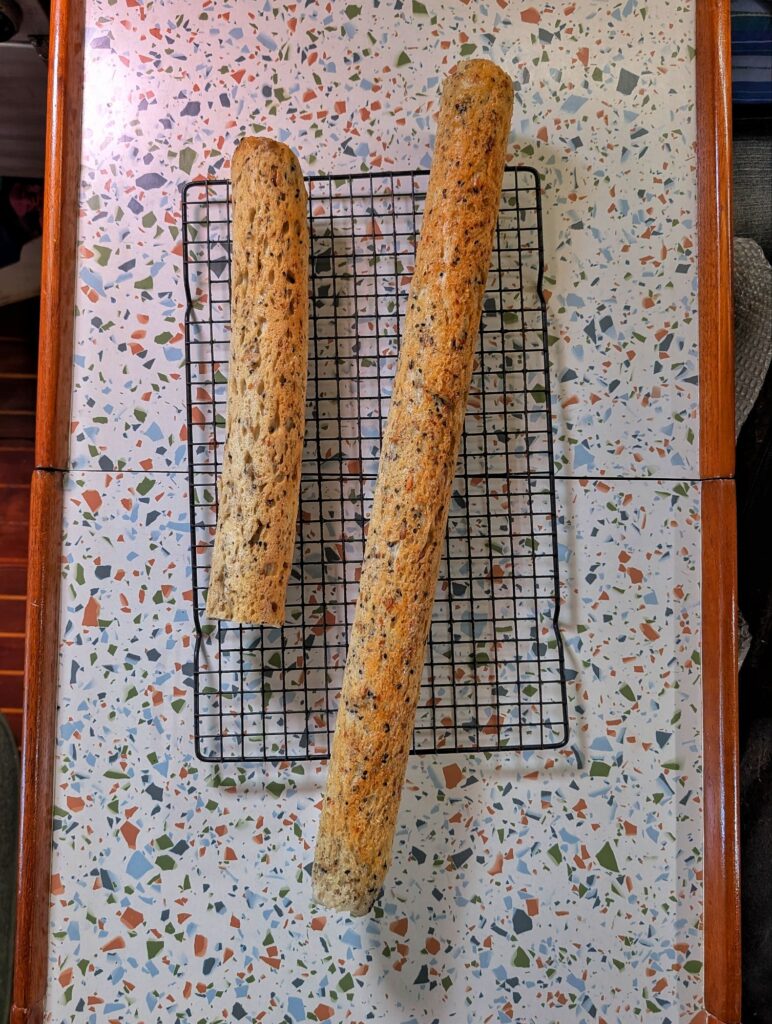
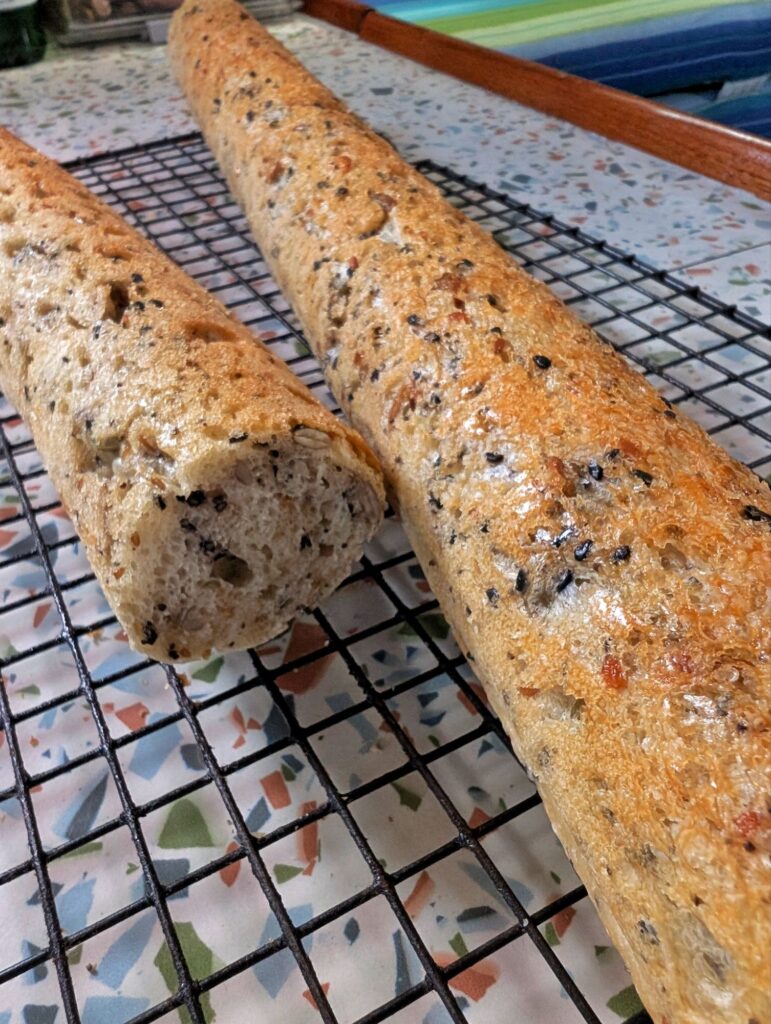
However, with a hankering for something sandwichy the other day – and perhaps another cold supper starch alternative – I decided it was a great opportunity to dig out the GoSun and bake a log of bread. (OK, that would probably sound more appetizing if I were to say bake a baguette, but since the solar oven builds up steam it doesn’t result in much of a crispy crust, and the bread is long, thin, and a perfectly round. Log of bread it is.)
My solar cooking journey started when I borrowed a box-type solar oven from a catamaran when we were in Mexico.
I never considered it more than a fun experiment because I instantly knew that we did not have the storage space for such a behemoth piece of kit that could only be used for one very specific thing when the weather was just right.

However, when I had the chance to test a few other styles of solar ovens in 2018 for my column “Heather Francis OnBoard” in Blue Water Sailing Magazine, I was pleasantly surprised to find that there had been innovations in solar oven design.
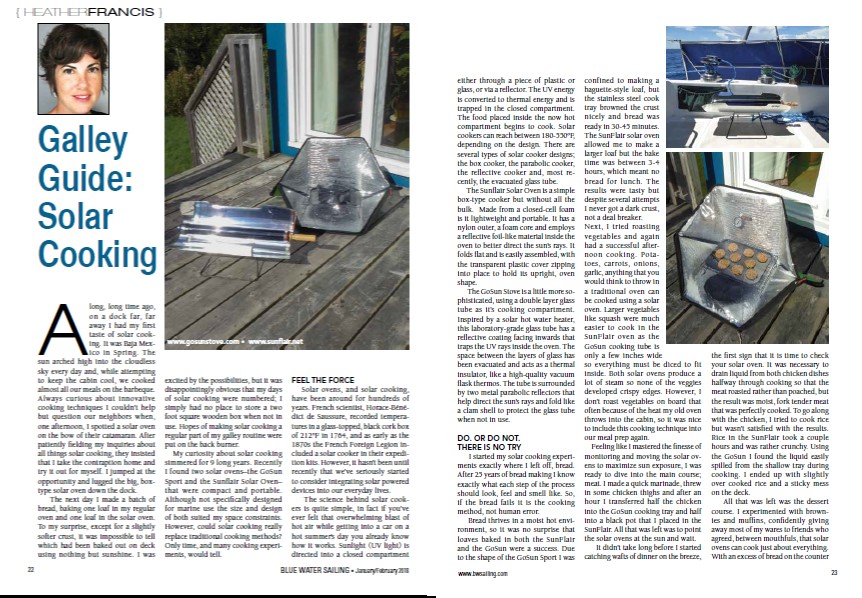
In that article I actually tested the solar ovens both while onboard in the tropics, and then schlepped them back to Canada in October to see how they performed in cooler weather and duller light conditions. If you’d like to read more about how solar cooking works and see the different designs of solar ovens, you can find that article HERE.
I kept the GoSun because it got the hottest, was the most stable on deck in a bit of a breeze, and because it folded up tidily and lived in a nice storage bag. (It reminds me of the soft cases for an alto sax, for those of you who were fellow high school band geeks.) It is tucked away under the nav table – doubling as a climbing ramp for Kitten who’s stumpy little legs can’t manage the steep companionway steps when she want to exit the cabin – and is a little out of sight, out of mind, I must admit. But full sun skies and searing hot temps reminded me that I do have access to a heat-free method of cooking, if I don’t mind working within the constraints of the size of the GoSun oven tube.
And that’s the down side of the GoSun.
This little oven gets plenty hot but the long, skinny, shallow cooking tray that slides into the double walled, vacuum glass tube limits the size and shape of what can be cooked.
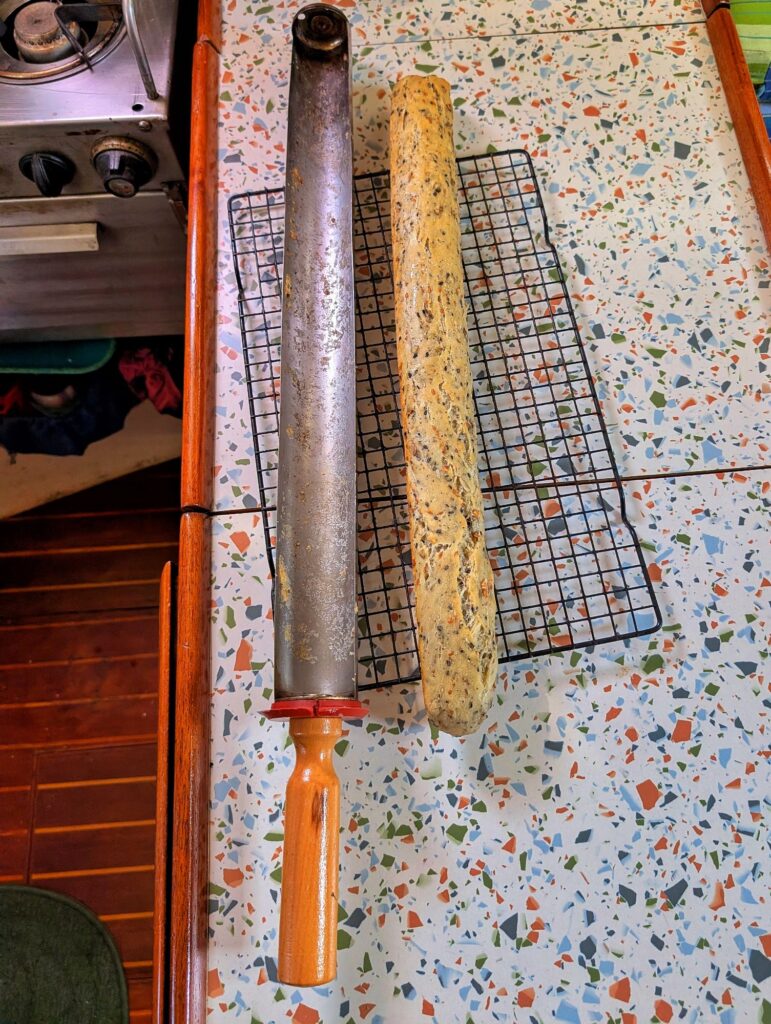
Potatoes if they are diced into small chunks, chicken cut into strips is good, grains can be done as long as you don’t add too much liquid at one time.
Way back when, I developed a recipe that got posted on the GoSun website for a Stuffed Squid with Saffron Rice, which was a lovely way to prepare squid without it getting chewy. However, looking at the rest of the recipes posted on the website, it was a little more involved, shall we say, than most users would want.

These days I mostly stick to things like…
Coco Banana Muffins using the silicon muffin liners that were included with the GoSun kit (always, always overripe bananas on the counter in the tropics) and logs of seedy bread. As is my habit, I usually get into a baking flurry, and end up with too many delightful bites sitting on the countertop, my solution to which is to find the nearest yachtie and brighten their day. Without fail they are both delighted to have some unexpected baked goods and surprised that they were cooked using only sunshine.
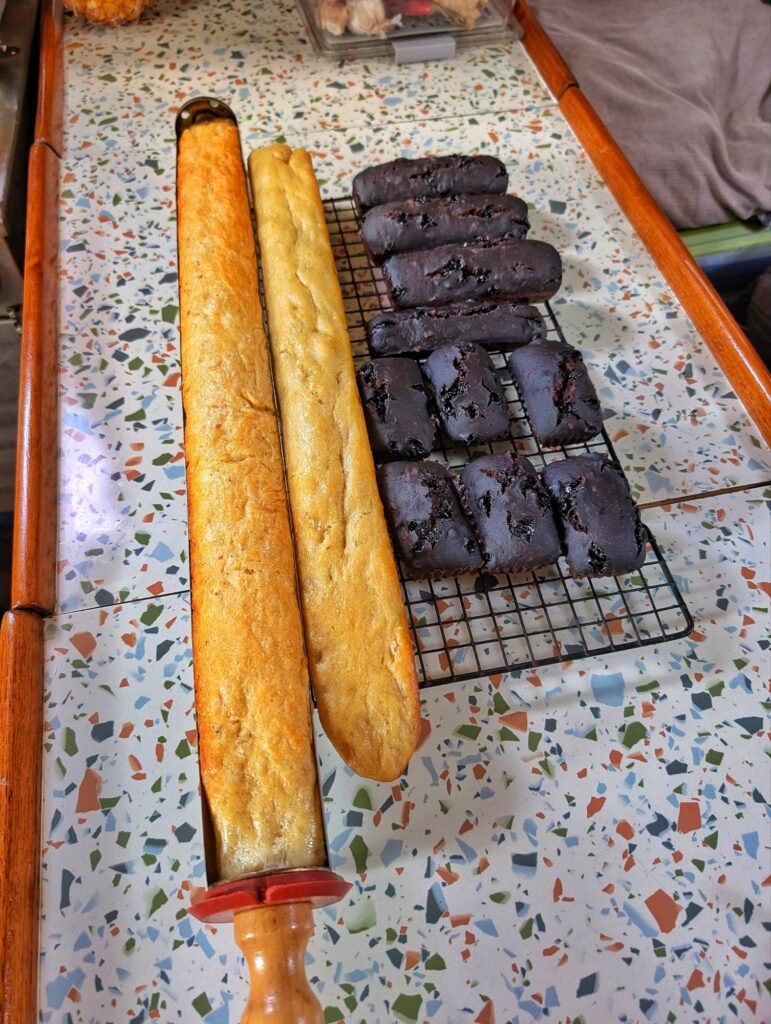
The bread that it makes is always fluffy and perfectly cooked, and if I use a generous amount of oil and am reaaaaaalllly patient then it will get every so slightly brown and maybe a little crunchy around the edges of the steel tray. It’s odd format doesn’t lend itself to eggs on toast very well, but I have often thought it would make perfect canapés…if one every had a reason to serve such things.
I have to admit, I am still filled with a sense of wonder and amazement every time I use my solar oven.
I mean you put dough in a glass tube, surrounded by aluminum reflectors, sit it in the sunlight for 30mins to an hour (depending on the day) and it actually generates and captures enough heat to bake it into bread! It’s as close to a magic trick as I’ll ever perform, and even on the hottest of days, that always makes me smile.
Love,
H&S
P.S. If you’d like some tips for using a solar oven you find those in THIS blog post from a few years ago.
P.P.S. If you’ve got any tips or interesting solar cooking recipes or resources please let me know!

