Over the past few months I’ve been trying to be mindful about how much ultra processed food I am consuming. Overall, I don’t rely on that many packages foods but I do have a weakness when it comes to crackers and sweat treats. Thankfully, I can get out the shop without a packet of crackers and sweets are only an occasional craving. I prefer things like 70% chocolate, a fresh baked croissant, or some kind of homemade baked good.
Fortunately for me, its hard to find good chocolate or French pastries in Kudat, and I refuse to bake when I am on my own.
I’ve been trying to satisfy my sweet tooth with fresh fruit. Mangoes were around for a while, dragon fruit and jackfruit are year round staples here. Then the other day I stumbled upon a lady at the market selling passion fruit. Passion fruit is definitely a tropical fruit but it isn’t grown here much, or at least I haven’t seen it much, either growing or being sold. And since it might just be my very favourite tropical fruit, I couldn’t resist buying a bag.
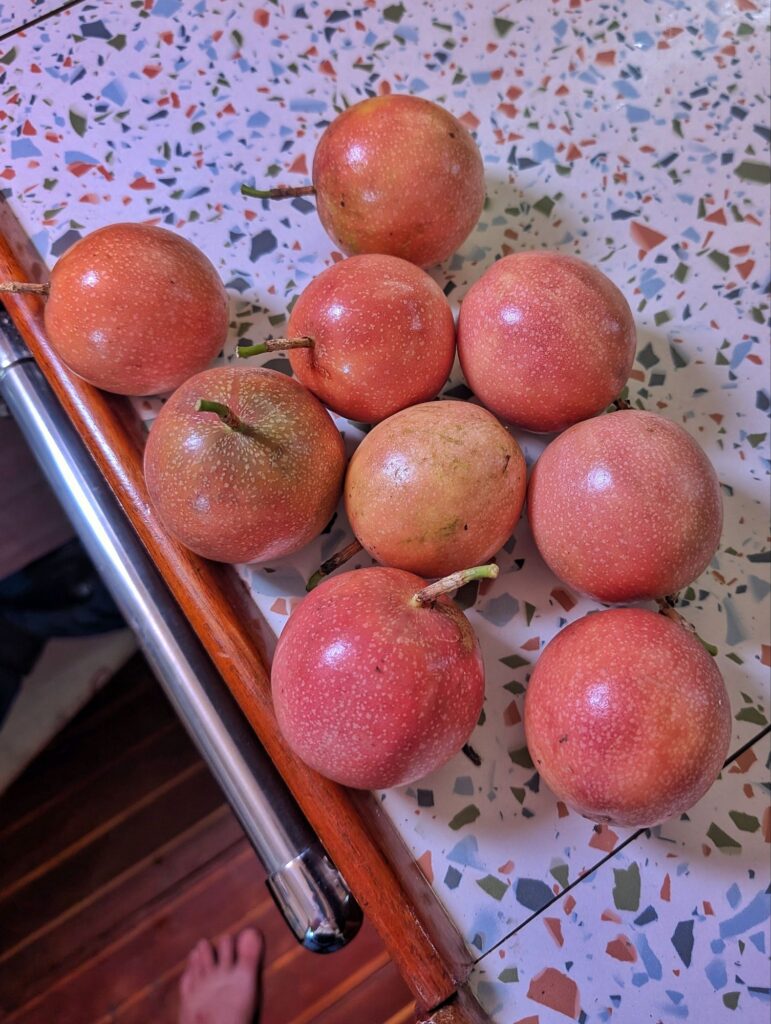
I admit that passion fruit is kinda of a pain in the ass to eat.
It’s right there beside pomegranate in its seeds to flesh ratio, annoying unless the fruit is at its peak. And these were, I could tell before I even cut one open because the whole boat smelled of their perfume as soon as I tumbled them out of the bag and onto the counter. Juicy and plump, fragrant and sweet, I ate two standing over the cutting board, eyes closed slurping every last drop from the fleshy cup left behind.
Of course, when I went back to the market there was no more passion fruit to be found. I resigned myself to having had the good luck of snagging them while they were perfectly ripe and decided to embrace the fall-ish vibes and buy a bag of apples instead.
This lady also has a reliable supply of sweet potatoes, which I have been eating nearly daily recently, so I usually swing by her stall when I am breezing through the market. And low and behold, this week, she had bags of passion fruit again! Of course, instead of buying one bag I bought two. But here’s the funny thing about me and fruit.
After the first lusty taste of the season where I usually over indulge, I kinda lose interest.
Not in the buying part. No, no, no. You can count on me to buy twice as much the second time around and then probably watch it languish on the counter for a few days so it loses all its fresh-picked goodness. And so it was no surprise to me when I woke up this past weekend to a pile of passion fruit that were starting to go soft and look a little moldy.
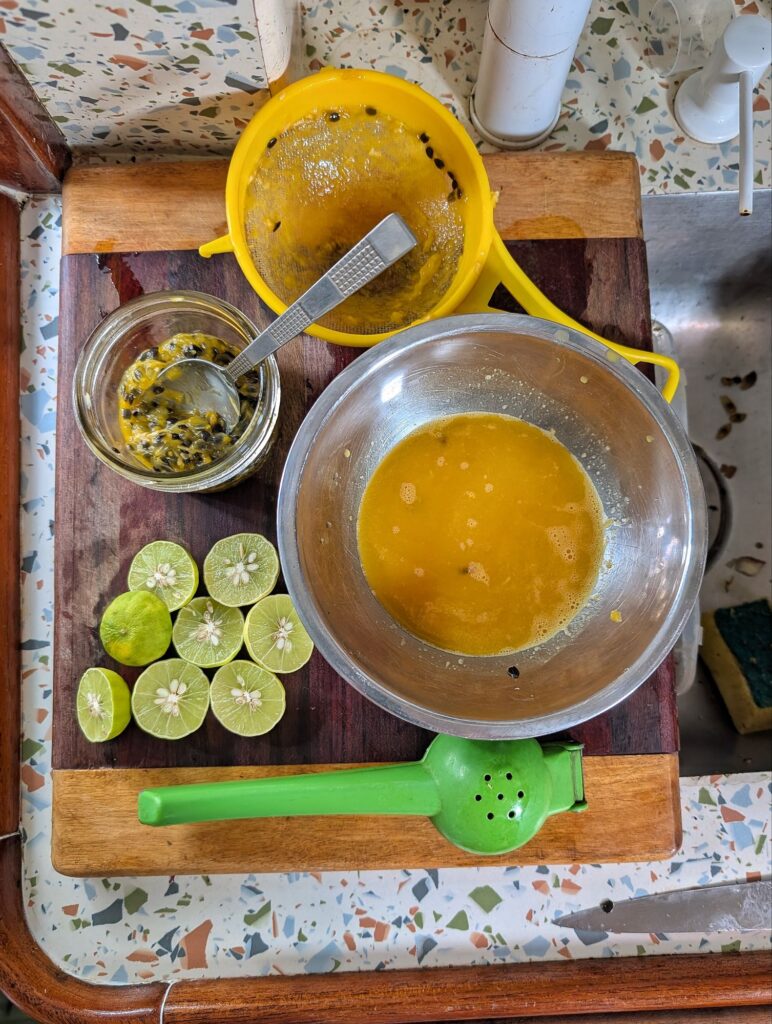
Determined not to waste the fruit, I decided to shell and shuck all the passion fruit, spooning the pulp into a glass jar. I ended up with more than a cup of passion fruit pulp, even after eating a couple for breakfast. I put the jar in the fridge, buying myself a couple more days to come up with a better idea than have a shot of rum and chase it with a shot of passion fruit pulp. (Ok, that doesn’t sound too bad when I read it aloud but I feared it would be rather tasty and dangerous.)
I was still really wanting something sweet, so I broke down and bought a small Cadbury Chocolate & Biscoff bar, something that YouTube has been pushing for the past couple weeks now. Sure it scratched the itch but it was, as Steve predicted, disappointing – all milk chocolate with the spicy Biscoff cookie lost in the sweetness. I am a Cadbury fan, don’t get me wrong, but I wanted something that felt indulgent and decadent, not just sugary sweet. That’s when I had the bright idea to turn my passion fruit pulp into a curd.
Not only preserving the fruit but concocting a luxurious, rich, spoonable treat that could sit in my fridge until my sweet tooth started aching again.
People are probably most familiar with lemon curd, but you can use any citrusy fruit. – limes, orange, grapefruit, even passion fruit. The only thing that differs when using passion fruit is that it is nicer to pass the fresh pulp through a sieve to separate out the crunchy, black seeds. (Although I do like to leave a couple in to the jar a little visual interest.)
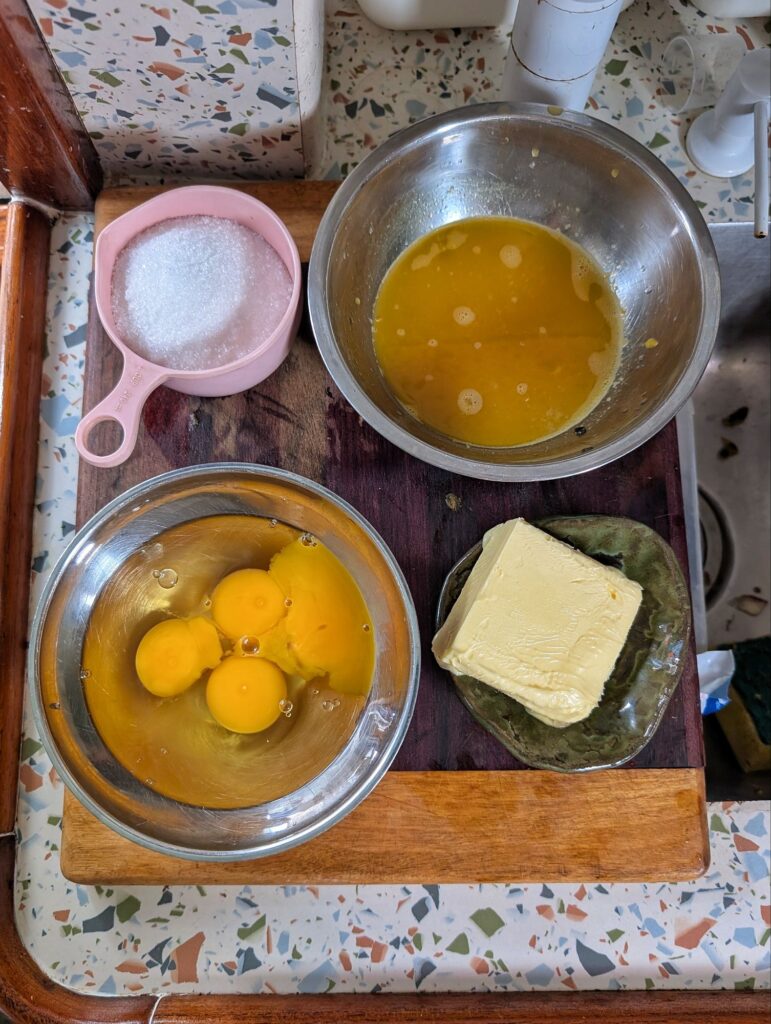
Despite it’s rather fancy attitude, making a curd is neither difficult or time consuming. In fact, all it takes is only four ingredients and some constant stirring as they wallow over the gentle heat of a double boiler. I happen to buy some sweet potatoes that day and decided that in the time it would take them to cook I could whip up a batch of passion fruit curd, using the simmering pot of potatoes as my double boiler.
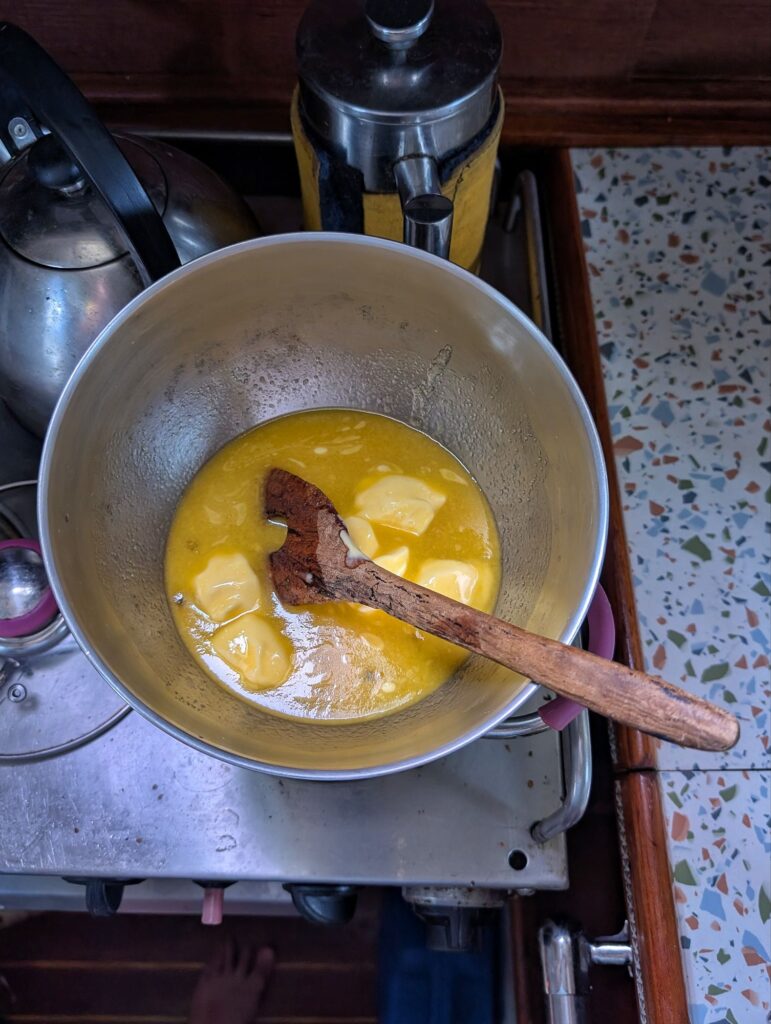
In went the passion fruit pulp with a few squeezes of lime juice, a bit of sugar, and some butter. I stirred the mixture and watched as the butter began to melt. Then I lightly beat together a few whole eggs and an extra yolk or two (depending on how rich you like it and how many fresh eggs you have on hand) and tipped them into the warm mixture.
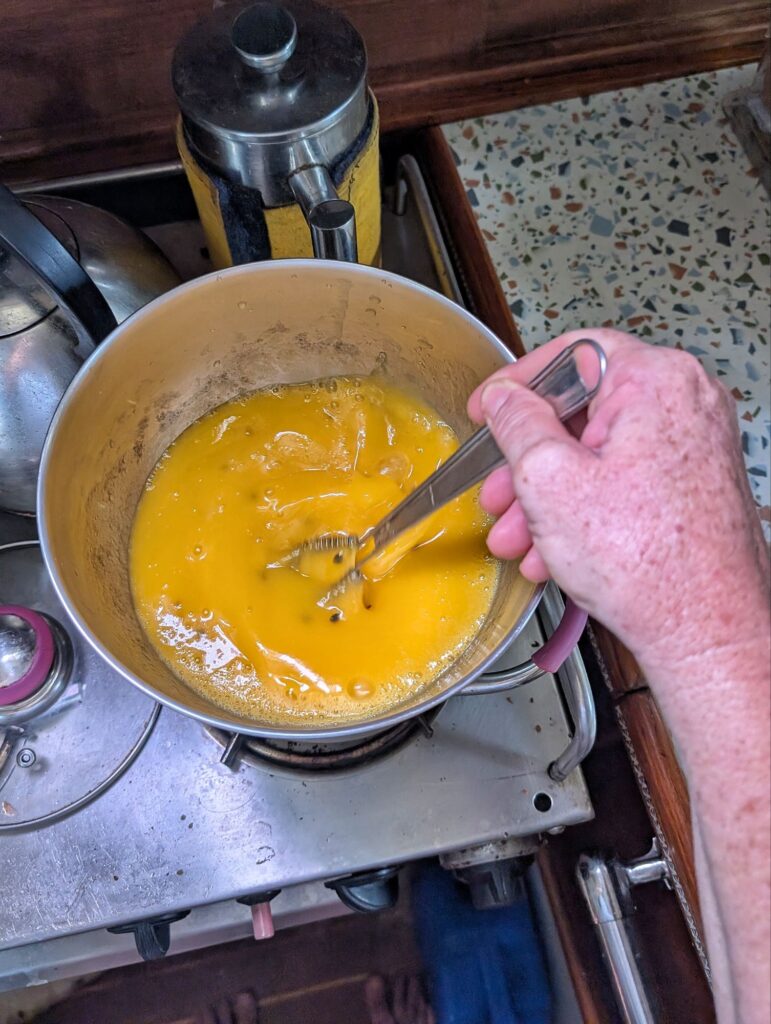
I turned down the heat slightly, whisked it until the ingredients were well combined. Then I switched back to my wooden spoon and continued to stir gently. When I began to feel the mixture thicken slighly I switched again to a rubber spatula and kept stirring gently. Because here’s the trick to making a great curd.
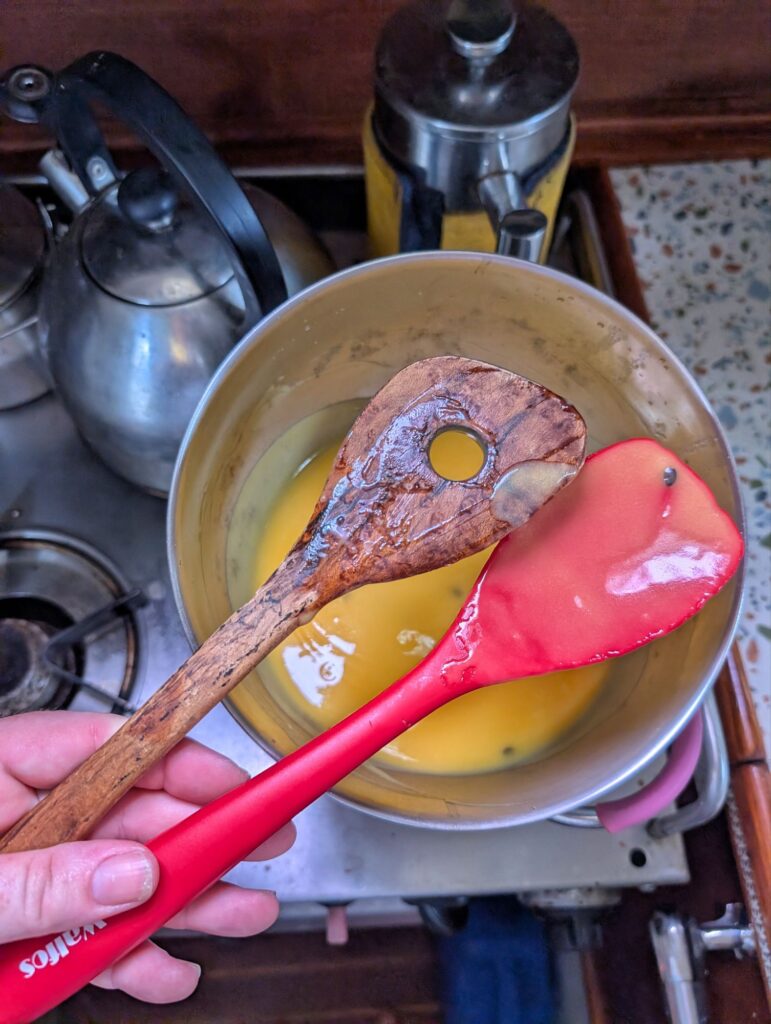
Don’t step away from the bowl. Don’t even look away from the bowl. And most important, don’t ever stop stirring gently.
This sounds intense, but things can go from smooth and silky to scrambled eggs in a blink of an eye if you’re not paying attention. So, I recommend that before you put anything in the bowl you do some basic wrist warm ups, get yourself set up with a cold drink, and find a comfortable stance (soft knees people!)
As the butter and sugar come up to melting the eggs will gently cook through and thicken the mixture. However, if you don’t stir it constantly, the eggs will cook unevenly and you can end up with little bits if scrambled eggs throughout. Not great, but also not a complete deal breaker. If this happens, then when the curd is fully cooked you can just pass it through a sieve to catch any weird eggy bits.
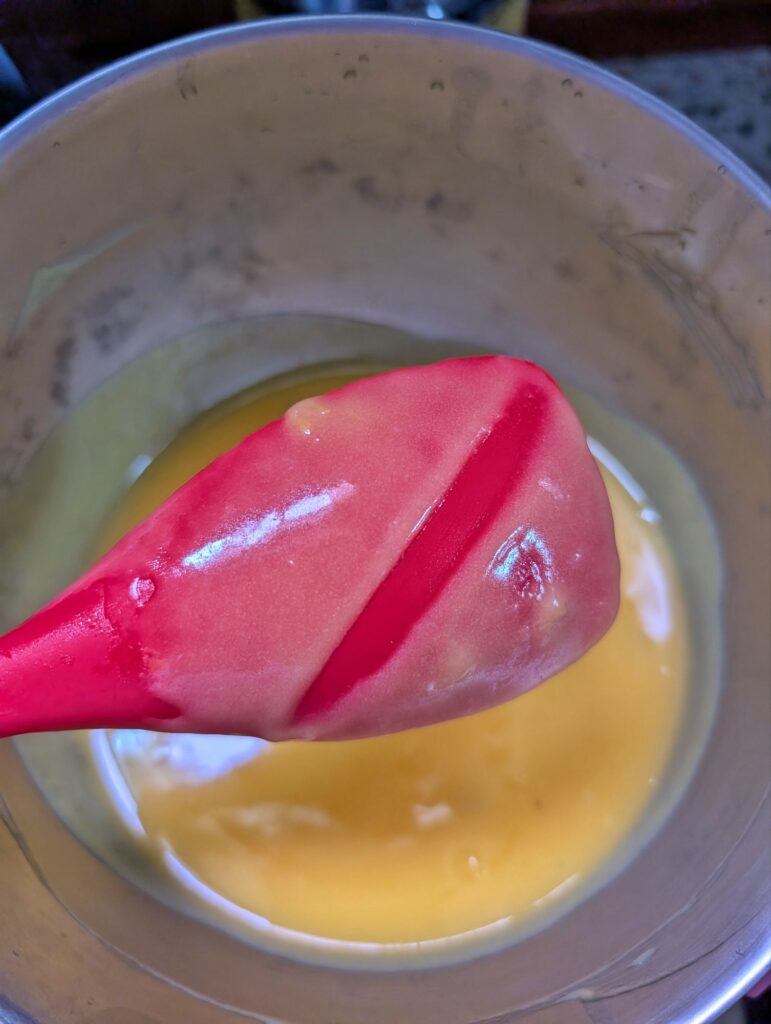
You’ll know when the curd is done – AKA the raw egg is cooked through enough to be safe – when the mixture coats the back of spoon and when you run your finger through it the lines hold. (Also prime opportunity to taste you curd.) This is somewhere in the region of 10-14 minutes in a double boiler over a gentle simmer. The mixture will thicken as it cools and then further when it is put in the fridge.
When finished, pull it off the heat and let it cool in the bowl slightly, stirring less frequently but still often enough to prevent a skin from forming. When it has cooled a little (I recommend dipping a finger every 30 seconds or so until you’re happy with them temp) pour into clean jars. Since this is a preserve that will go directly into the fridge I just wash my jars, swish with scalding hot water, and dry with a clean towel.
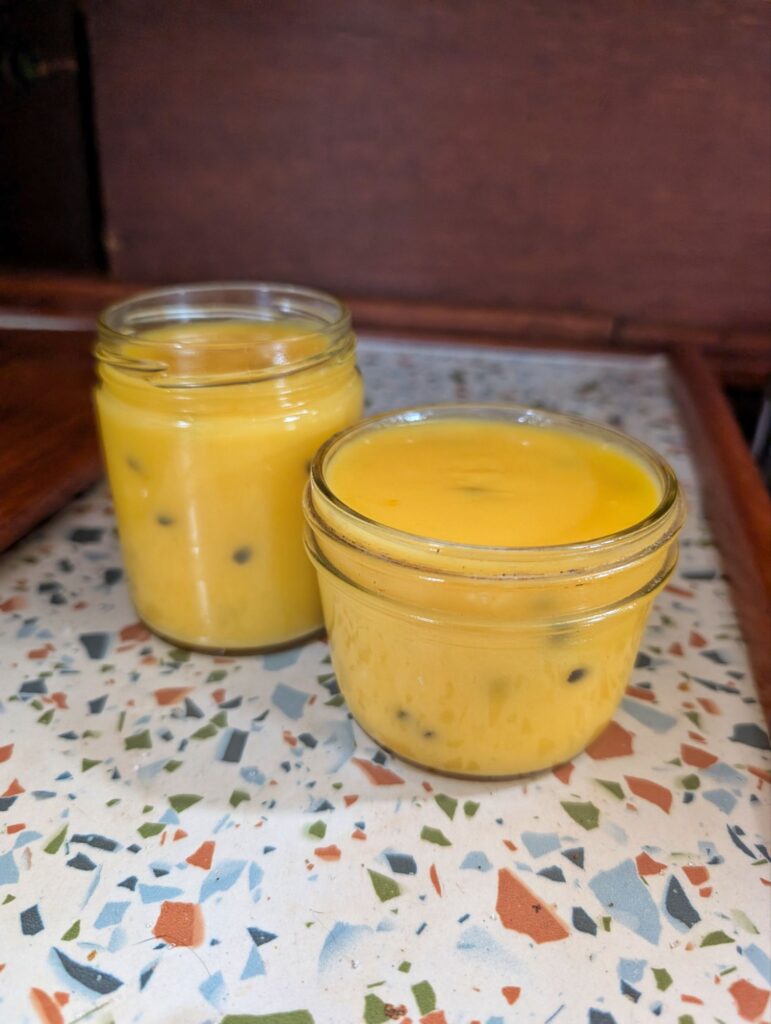
Curds are not recommended for water bath preserving or long term storage. Which is why most recipes only make a couple jars. I do, however, recommend them as hostess gifts, or Christmas presents, or just to brighten up someone’s day. As I hope this RECIPE brightens up your day.
Love,
H…&S